
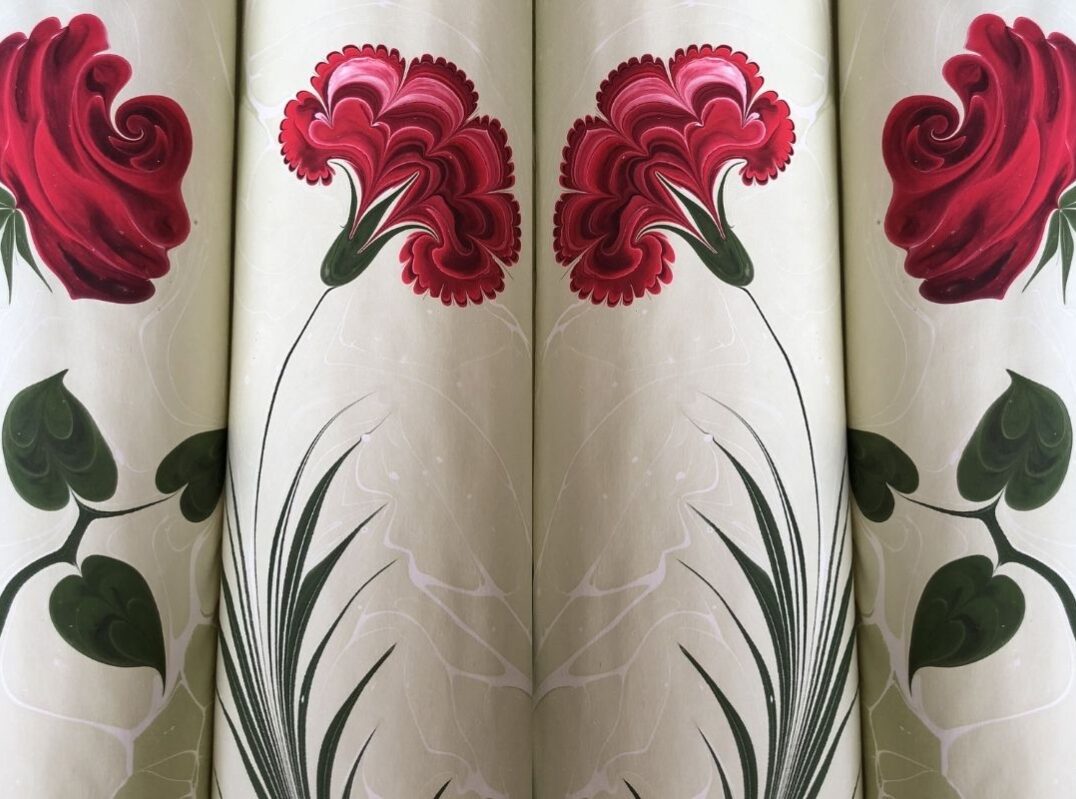
The Mesmerizing Art of Turkish Marbling
Marbling art is a traditional decorative Turkish art that involves creating colorful patterns by sprinkling or dripping non-soluble paints onto a thickened liquid surface, and then transferring these designs onto paper. Marbling art creates a unique harmony of colors on the water's surface.
Many believe marbling art began in the 13th century in Central Asia. From there, it spread to China, India, Persia, and Anatolia. The Ottomans developed new techniques and designs, using the art form on official documents.
The Calming Dance of Water, Paint, and Patience
Working with marbling is more than just creating art. The movement of the water is believed to release positive ions, which have a calming and positive effect on people. The balance between the water, brushstrokes, paints, and ox-gall (a traditional ingredient) creates a harmonious dance. The artist must work patiently to achieve harmony between the water and paints. This process teaches acceptance, as the paints don't always move as desired.
A Glimpse into History
While the exact origins of marbling are uncertain, various accounts suggest it emerged in Iran, India, and Turkistan. The art form arrived in the Ottoman Empire via Iran. Around the 9th and 10th centuries, this art reached Iran from Turkistan through the Silk Road, where it was called "Ebri". Because its appearance resembled cloud clusters, the Persian word "Ebru," meaning "related to the cloud," became the most fitting name for this art. In Turkey, the art is commonly known as Ebru, which equates to the Persian term Abri.
European travelers later brought marbling to America, England, France, and Italy. The earliest documented marbling work dates back to the 16th century. Europeans called it "marbled paper" because the patterns on the paper resembled marble veins.
The Legacy Continues
Marbling's rich history and mesmerizing techniques continue to inspire artists and enthusiasts worldwide. Whether you're an experienced artist or a beginner, exploring marbling offers a unique blend of creativity, patience, and cultural appreciation.
Summary of Key Points
- Marbling art is a traditional Turkish art form with origins in Central Asia.
- The process involves creating colorful patterns on water and transferring them to paper.
- Marbling art is valued for its calming effects and the balance it requires between artist and materials.
- The art form spread through the Silk Road and eventually reached Europe, where it was called "marbled paper".