
Steps to Create Marbling Art
Marbling art, also known as Ebru, is a magical process where patterns float elegantly on water before being transferred onto paper. This ancient art requires precision, patience, and balance. If you're ready to explore the world of marbling, here's a step-by-step guide to help you master it!
1. Setting Up the Marbling Tray
To begin, prepare the marbling tray by creating a viscous water solution. Mix 2 tablespoons of kerajin into 5 liters of settled, lime-free water and blend thoroughly. Let the prepared marbling water rest for 1–2 days to achieve the perfect consistency.
2. Preparing the Paints
Marbling paints are made from natural pigments that do not dissolve in water or contain oils. To use these paints, adjust their consistency by mixing in water and ox gall. Proper amounts of ox gall ensure the paints spread evenly on the water’s surface, an essential touch for creating beautiful designs.
3. Designing Patterns on the Water
- Use a brush to sprinkle the prepared paints onto the surface of the marbling water.
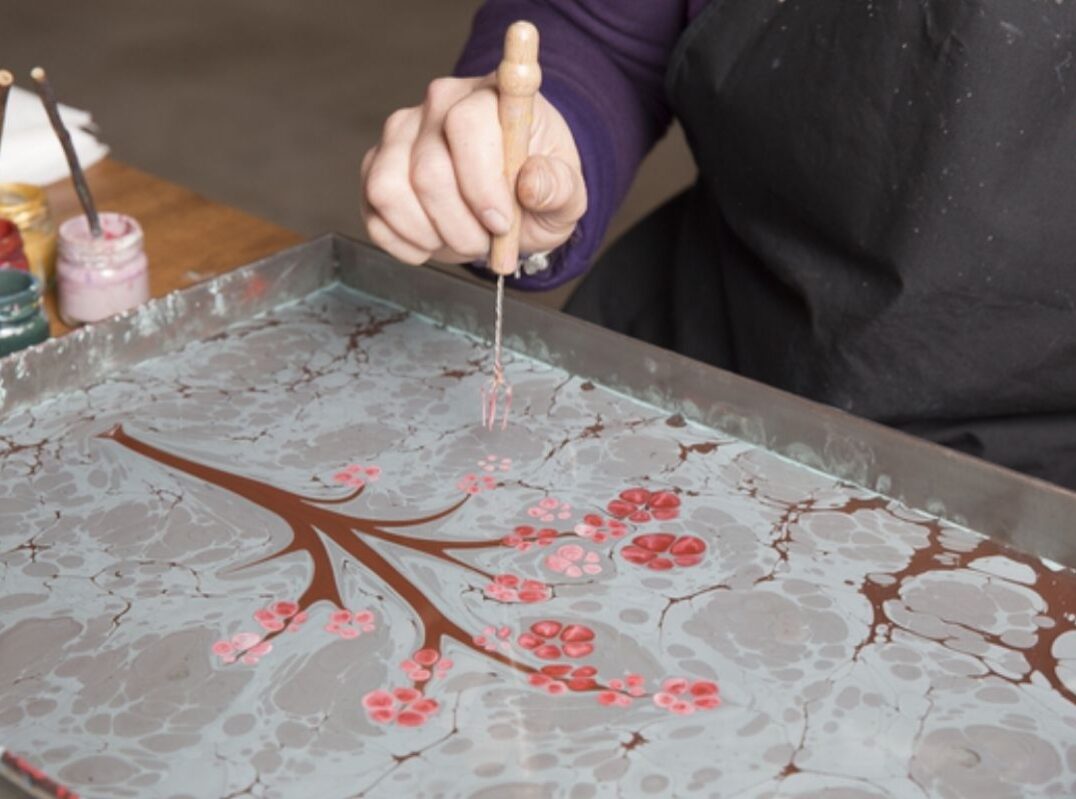
- As the colors spread and form natural patterns, use tools like a needle, comb, or fine sticks to shape and refine the designs into your preferred style.
4. Placing the Paper
- Once your design is complete, carefully lay absorbent matte paper over the surface of the marbling water.
- Ensure the paper touches the water evenly without leaving any air bubbles. This step is crucial for a flawless transfer of the design.
5. Lifting the Paper
- After a few moments, gently lift the paper off the surface by holding the edges.
- Let any excess water drip off, then place the paper on a flat surface to dry completely.
6.Drying and Preservation
Once the paper is fully dry, preserve it in a cool, dry place to maintain its vivid colors and quality over time. Proper care ensures your marbling art remains vibrant for years to come.
Creating stunning marbling art requires balance in every aspect: the consistency of the marbling water, the ratio of ox gall in the paints, the balance of temperature and humidity, and even the movements of your hand. When everything aligns perfectly, the results are mesmerizing.
For Example, Stone Pattern is Formed (Battal Ebru)
Stone Pattern is the most fundamental and classic style of Turkish marbling art. This technique focuses on the natural flow of colors, without any manipulation of the patterns.
Here's how you can create Stone Pattern:
- Use your brush to lightly tap the tray’s edge, sprinkling paint onto the water’s surface.
- Add different colors layer by layer, increasing the ox gall amount with each new color.
- Allow the paints to naturally expand and create random, organic patterns.
- Avoid interfering with the design – let the paints spread as they wish.
- Carefully place your matte marbling paper onto the surface, ensuring no air bubbles form.
- Gently lift the paper, let excess water drip, and lay it flat to dry.
Conclusion
Marbling art is a journey of harmony, mindfulness, and creativity. Whether creating a dynamic pattern or the calm simplicity of Stone Pattern, every piece tells its own story. Experiment with colors, enjoy the natural flow of the paints, and most importantly, let your creativity shine!